Second Jedediah Smith Trail 1824 — 1826
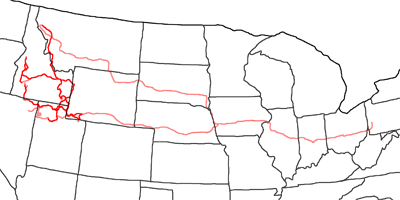
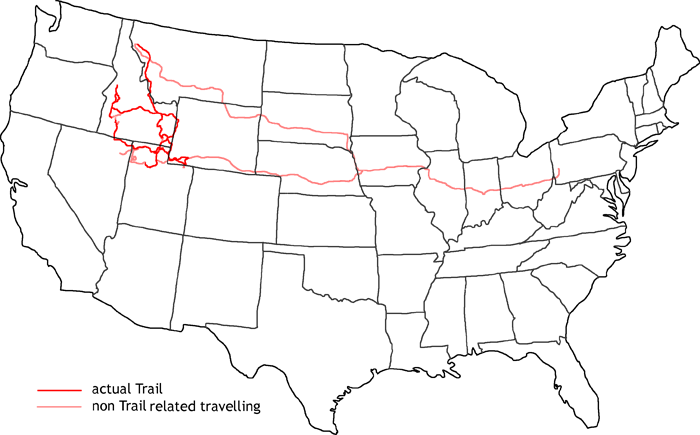
Map of second Jedediah Smith Trail
This year, I am following the trail of Jedediah Smith in the years 1824 — 1826. I will follow his trails also in the next couple of years until his death in 1831 by Comanches. I start in the area of Thompson Falls. In 1824, the Flathead Post was in this area. Peter Skene Ogden, a British fur hunter, arrived with his men just before Alexander Ross and Jedediah Smith on November 26th, 1824. Ogden had the whole outfit for his Snake expedition, whereas Smith was low due to the long time he was without supply from St. Louis.
On December 20th, 1824, the combined group (the British under the command of Ogden and Americans under the command of Smith) left Flathead Post. They took the same way as Smith used in the fall to reach Flathead Post. On January 12th, 1825, the group arrived at Gibbons Pass and they moved on into the Big Hole Valley.
Now they entered the dangerous Blackfoot Country and they had to be very cautious. So, Smith was very happy to join Ogden’s group, even that this means they have a British trapping party on American soil. On February 6th, the group arrived at the foot of Lemhi Pass and they crossed the pass on February 11th. Now they would be only an 8 days march away from the beaver rich Snake River. But the deep snow in the Lemhi valley prevented them from moving on.
For 7 long weeks, the group was trapped in the valley before Smith bought supplies from the British and moved out on March 17th. A couple of days later, also Ogden moved on, surprisingly the same way as Smith took along the Little Lost River.
On April 6th, Ogden arrived at the mouth of the Blackfoot River on the Snake River and fall into the Americans again. Now, the hunt for beavers began, where everyone (British and American) wanted to have the best hunt. On April 20th, both groups where at the upper Portneuf River and on April 26th they reached the Bear River. They hunted along the Bear River into Cache Valley at the Salt Lake, nowadays Utah.
Ogden moved further on to the south, farther than any British group ever was. He was now in the area, where the city of Ogden should later be named after him. In the meantime, more American hunting groups arrived in the valley, also the group around Weber with John Gardner. Gardner stated to Ogden, that he was on American soil and he had to turn back. Also a lot of Ogden’s men deserted to the Americans, because they payed better prices. So, Ogden has no other choices than to return to Flathead Post.
In the meantime another group set off from St. Louis under the command of Ashley to meet Smith. The first rendezvous happened in the area of Henrys Fork at the Bear River. On July 2nd, Ashley and Smith set off to St. Louis with the season hunt of beaver. They arrived on October 4th. There, Smith received the offer to be partner in the new founded Smith, Jackson & Sublette company. What a career for someone, who started as the greenest of all into the West a couple of years ago!
Smith’s way back probably followed the later Oregon Trail. Then he went from Green River to the Hoback River and on to Jackson Hole, around the Tetons to Henrys Fork, on to the Snake River and along Salt River and Smiths Fork down to the Bear River and into Cache Valley. There, he build up his winter quarters.
Probably in February 1826, he crossed the Promontory Mountains by the way of the later railroad and reached the Salt Lake Desert. He was in search for the Big River, the Buenaventura, which should empty to the Pacific Ocean. Probably, the Indians have been talking about the Humboldt, which never reached the Pacific.
At the northwest corner of the lake he built up bullboats and paddled around the Salt Lake. Sure, they didn’t found this non–existent outlet of the lake. But in the West, something looks like an outlet. Then they started again along the later railroad route in search for beaver. They probably went to Lucin and on to eastern Nevada. As there was no beaver in the semi arid landscape, Smith turned frustrated to the north, following Salmon Falls Creek to the Snake River and into well known beaver country.
He moved further up north to the Boise River, trapped the Payette River to its roots, returned to the Boise River and trapped on to the Big Wood River. Then he crossed over to the Big Lost River, crossed again the lava plains around nowadays Idaho Falls and moved on to Cache Valley. The exact route is not known. But probably he went to Henrys Fork, crossed the Tetons to Jackson Hole and followed the Snake River to the Salt River, reaching the Bear River.
Then he moved on to Cache Valley for the second big summer rendezvous in the vicinity of nowadays city of Hyrum. Also Ashley set off in St. Louis on March 8th with supplies for the trappers and to receive the season fur hunt from them. In July, he moved back to St. Louis, which he reached the last week of September. Smith will start his Southwest Expedition in July, which I will follow next year. I return from Ogden along the Interstates to Pittsburgh.
The first daily trails are online, the rest is in preparation
- Day 1: August 22nd, 2010 Munich — Pittsburgh
- Day 2: August 23rd, 2010 Pittsburgh (Mine)
- Day 3: August 24th, 2010 Pittsburgh
- Day 4: August 25th, 2010 Pittsburgh (Chevrolet Dealer)
- Day 5: August 26th, 2010 Pittsburgh (Radiator Removal)
- Day 6: August 27th, 2010 Pittsburgh (Radiator Installation)
- Day 7: August 28th, 2010 Pittsburgh (Radiator Connections)
- Day 8: August 29th, 2010 Pittsburgh (Radiator Connections, Fog Lights)
- Day 9: August 30th, 2010 Pittsburgh (Transmission)
- Day 10: August 31st, 2010 Pittsburgh — Columbus
- Day 11: September 1st, 2010 Columbus — Iowa City
- Day 12: September 2nd, 2010 Iowa City — Chamberlain
- Day 13: September 3rd, 2010 Chamberlain — Billings
- Day 14: September 4th, 2010 Billings — Missoula
- Day 15: September 5th, 2010 Missoula — Hamilton
- Day 16: September 6th, 2010 Hamilton — Idaho Falls
- Day 17: September 7th, 2010 Idaho Falls — Logan
- Day 18: September 8th, 2010 Logan — Evanston
- Day 19: September 9th, 2010 Evanston — Green River
- Day 20: September 10th, 2010 Green River — Ogden
- Day 21: September 11th, 2010 Ogden — Wendover